
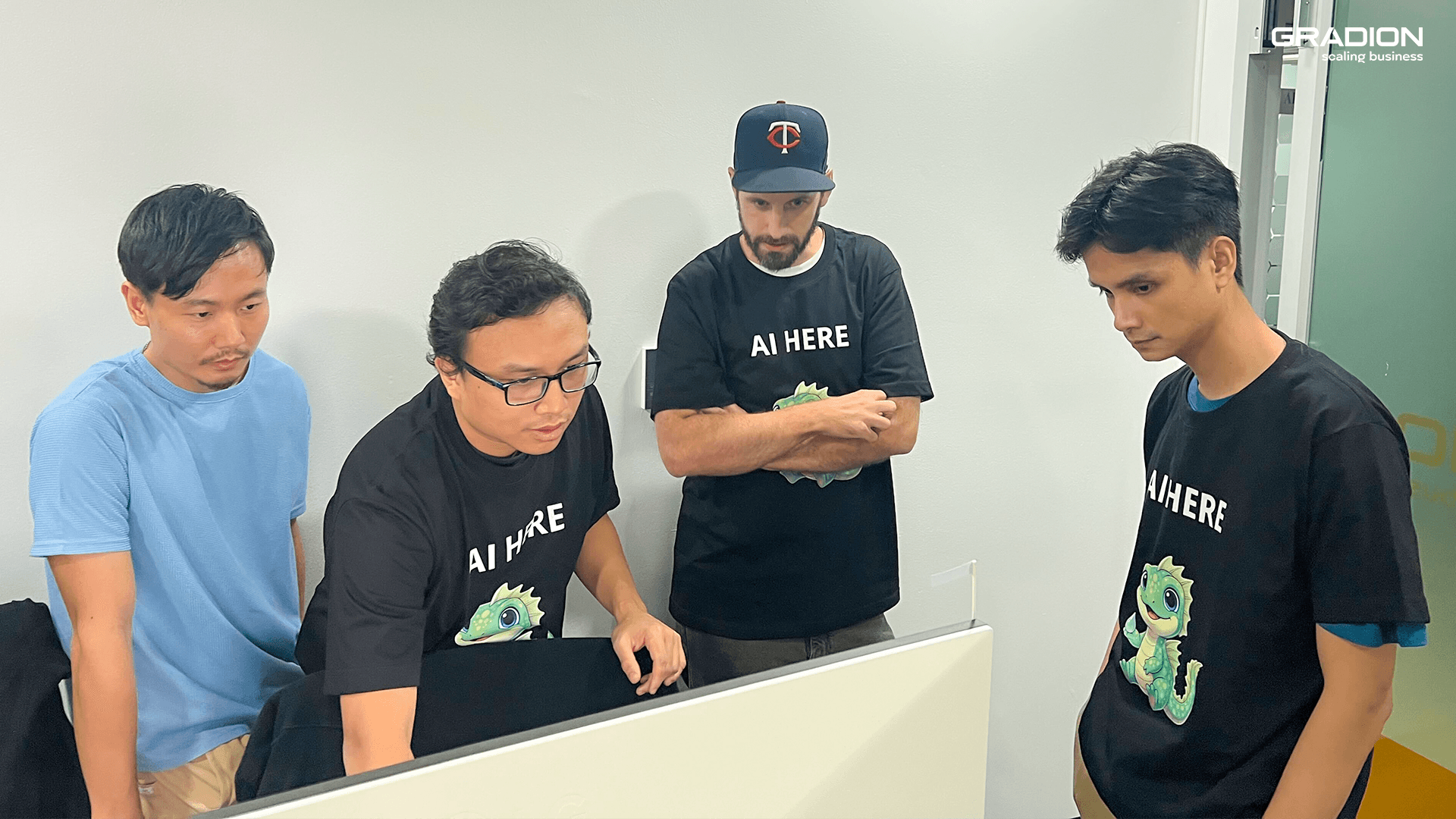
Designer Furniture E-commerce: Supplier operations transformed in eight weeks. AI eliminated 70% of manual work across procurement, warehouse, and finance.
Snapshot
Client
Premium retailer's supplier operations
Industry
Retail & E-Commerce - Premium Designer Furniture and Home Accessories
Geography
Germany
Size
~201 employees; estimated revenue ~EUR 79–112M
Challenge
Supplier workflow automation, AI integration, process digitization
Services
System design & development, AI integration, process automation, custom platform integration, supplier workflow optimization
Duration
Ongoing
Team
1 Technical Advisor, 1 PM/PO, 1 AI Engineer
70%
reduction in manual work
Download this case study as a PDF
Shareable leave-behind · auto-generated · always up to date
Client Context
The client has been curating premium designer furniture and home accessories since 2005. Based in Germany, the company offers more than 34,000 products from high-profile international brands, with furniture accounting for approximately 74% of revenue. The enterprise occupies a distinct position in the German e-commerce market: not a volume retailer, but a carefully edited selection of design-led objects that justify a premium shopping experience. The company joined a prominent Danish design and retail group in 2020. With an estimated annual revenue in the range of €79 million to €112 million and approximately 200 employees, the brand competes with major international furniture retailers on curation, service quality, and brand reputation rather than price.
The Challenge
The client’s supplier operations had been managed with tools appropriate to a smaller business: emails, spreadsheets, and experienced staff who knew the workflows by memory. For years, this worked because the team was skilled and the processes were familiar. But as the business expanded, with more SKUs, more suppliers, and more order volume, the same tools became a structural liability. The daily reality looked like this: supplier emails accumulated in inboxes, requiring manual review and action. Invoices arrived as PDF documents that had to be read and re-keyed into internal systems. Order confirmations, delivery updates, and warehouse notifications moved through disconnected channels, with no single source of truth. The teams responsible for procurement, warehouse management, and finance each had partial visibility into supplier status, but no shared system. The consequences were predictable: manual data entry errors, delayed invoice processing, difficulty matching orders to deliveries, and a team spending significant time on coordination rather than judgment. Scaling this approach further was not viable. What made the challenge technically interesting was the supplier side constraint. The company could not require its suppliers to change how they communicated, as many had established formats and systems of their own. Any solution would need to adapt to supplier behavior, not the other way around. This ruled out a simple EDI mandate and pointed toward intelligent automation as the path forward.
The Approach
Gradion deployed a three-person team, including a Technical Advisor, a PM/PO, and an AI Engineer, with a clear eight-week mandate: design and deliver a centralized supplier order management system that would become the operational backbone for all supplier workflows. The design principle was consolidation. The client’s supplier interactions, such as orders, order confirmations, invoices, and warehouse updates, would all flow through a single platform, giving every relevant team a unified view of supplier status at any moment. This addressed the cross-team visibility problem without requiring wholesale process redesign. The technical breakthrough was the integration of an AI-powered document processing solution to handle PDF processing. Rather than requiring suppliers to submit structured data, the system was built to accept PDFs in suppliers’ preferred formats and automatically extract, validate, and route the relevant information. Invoice fields, line items, delivery dates, and order references are parsed and matched without human intervention. This is the mechanism that eliminated 70% of the manual effort that had previously been absorbed by the company’s internal teams. The platform was integrated carefully against the enterprise’s existing workflows to avoid disrupting established processes during the transition. Supplier-facing behavior did not change, as they continued using their own formats and communication methods. The intelligence sat entirely on the client’s side. A secondary benefit was unlocked by the data now captured and structured within the system: real-time supplier performance tracking and historical order data that the company can use for demand forecasting and procurement risk management. The platform does not just automate the present; it creates data assets that improve future planning.
70%
reduction in manual work
The Results
70% reduction in manual work: AI-powered PDF parsing eliminated the majority of data entry tasks across the supplier management workflow. Unified operations hub: Orders, confirmations, invoices, and warehouse updates were consolidated into a single accessible system. Cross-team alignment: Procurement, warehouse, and finance teams are now operating from the same data with shared visibility. Supplier-friendly integration: Suppliers retained their preferred communication formats, as the intelligence adapts on the client's side. Real-time supplier performance visibility: This enables proactive management of delivery timelines and inventory risk. Smarter demand planning: Historical order data is now structured and accessible for forecasting. Delivered in 8 weeks: A lean three-person team moved from design to a live system within the project boundary. The transformation shifted the client's supplier operations from a reactive, manual function to a clean, data-driven capability. Teams previously managing coordination noise can now focus on operational decisions. The architecture is built to scale with the business without adding headcount to the supplier management function.
Services & Technology
Services delivered
- System design & development
- AI integration (PDF parsing and data extraction)
- Process automation
- Custom platform integration
- Supplier workflow optimization
Technology stack
- Natif AI (automated PDF parsing and data extraction)
- Centralized supplier order management platform
- Custom integration layer (supplier format compatibility)
- Real-time order and invoice matching logic
Engagement model
Project-based engagement
Discuss how we redesigned this Retailer's supplier operations, and what AI automation means for your workflows.
Describe the challenge. We will scope the engagement.