
Software Development in Vietnam: What European Companies Need to Know in 2026

Rosie Nguyen
9 August 2026
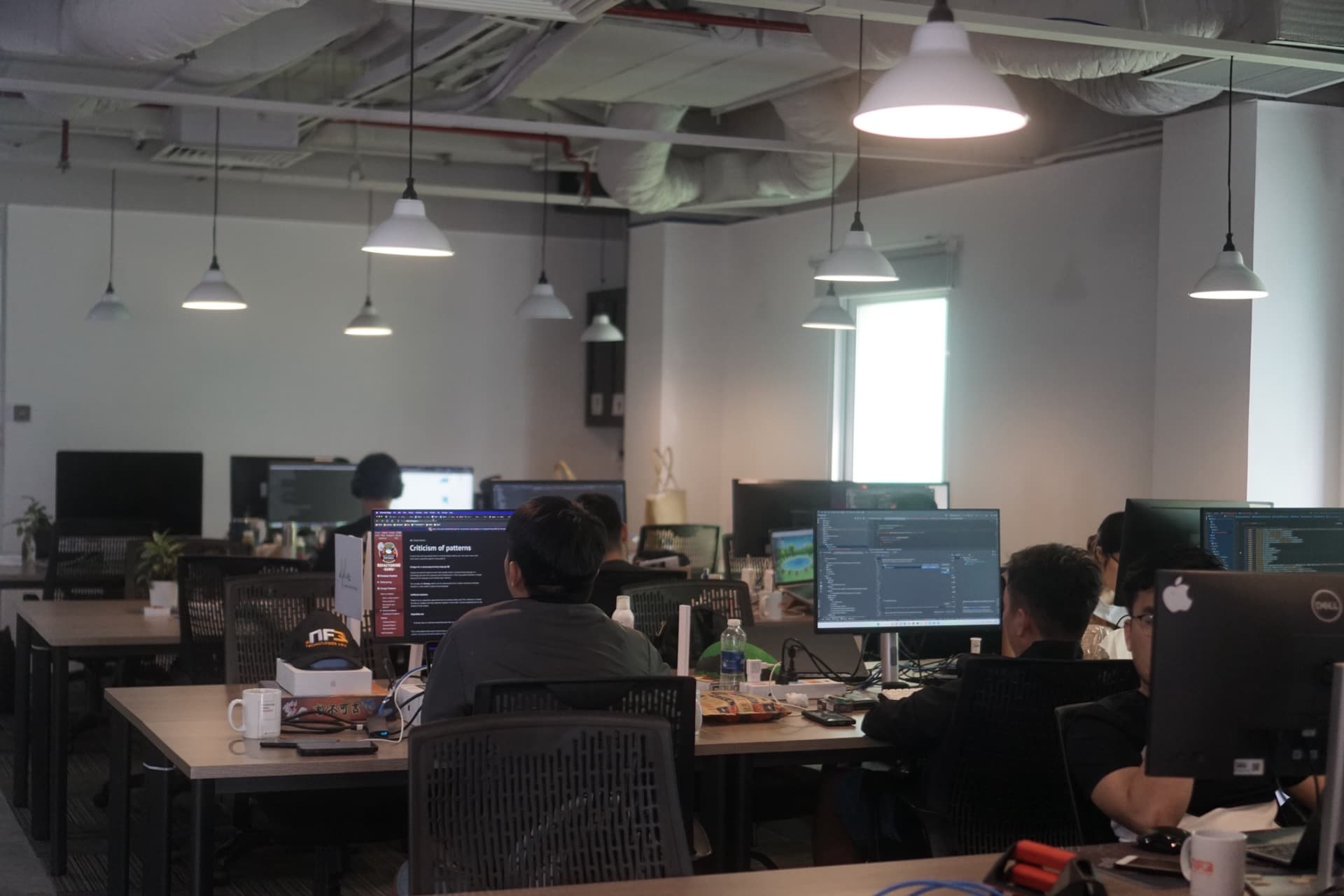
European companies that engage software development in Vietnam in 2026 consistently report the same outcome: senior engineering talent, faster delivery, and a cost structure 60 to 70 percent below equivalent German rates. The decision is no longer about whether Vietnam works. It is about how to structure the engagement so it delivers. This guide covers what European companies need to know: the talent market, engagement models that work, common failure patterns, and what to evaluate before signing.
Why European Companies Are Building Engineering Teams in Vietnam
Vietnam produces over 50,000 engineering graduates per year. The talent pool is strong in backend development, mobile, embedded systems, and increasingly in AI and data engineering. Senior engineers with 5 or more years of experience are available at rates significantly below European market equivalents.
The cost differential is real. It is not the primary driver for European companies that build successful long-term teams in Vietnam. The primary driver is availability. Senior engineers with strong system design skills, cloud architecture experience, and domain knowledge in manufacturing or fintech are difficult to hire in Hamburg, Munich, or Zurich. They are hiring in Ho Chi Minh City and Hanoi.
The time zone difference between Central European Time and Vietnam (GMT+7) is 5 to 6 hours. This is manageable with a structured daily overlap. A 3 to 4 hour window where both teams are active covers planning, review, and escalation. The remainder of both working days runs asynchronously. European companies that structure this deliberately describe the setup as a productivity advantage, not a constraint.
The Vietnam Software Development Partner Market in 2026
Ho Chi Minh City and Hanoi are the two primary engineering hubs. Da Nang is growing as a secondary hub with lower costs and a strong university pipeline.
The market includes three categories of provider. Large outsourcing firms with 1,000 to 5,000 engineers focus on staff augmentation. Mid-sized product development companies with 100 to 500 engineers focus on dedicated teams and project delivery. Boutique firms specialize in specific domains such as fintech, manufacturing systems, or eCommerce.
Salary inflation in Vietnam's technology sector has run at 10 to 15 percent annually since 2021. The cost advantage over European markets remains substantial. The assumption that Vietnam is a static low-cost market is incorrect. Companies that expect costs to remain flat over a 3 to 5 year engagement are consistently surprised. Build progressive increases into financial modeling from the start.
Engagement Models: What Works for European Companies
Three engagement models are used by European companies working with Vietnam software development partners.
Dedicated team: Engineers working exclusively on one client's product, led by a senior team lead who reports into the client's product organization. This model works best for companies that want engineering capacity that operates like an internal team. The client owns the roadmap and technical direction. The Vietnam partner manages HR, office, and administration.
Project-based delivery: A scoped engagement with defined deliverables, timeline, and acceptance criteria. This model works for well-specified work where the client has a clear outcome and does not want to manage a team directly. It works poorly for exploratory product development where requirements evolve.
Staff augmentation: Individual engineers embedded into an existing team, billed at a monthly rate. This model provides flexibility but requires the client to manage the engineers directly. It works well for senior specialists brought in for a specific capability gap. It works poorly as a default model for building product teams.
European companies that report the best outcomes consistently use the dedicated team model with a senior Vietnamese team lead who has direct access to the European product owner. Technical context is transferred at the team lead level, not through ticket systems.
What Fails: Common Mistakes European Companies Make
Four patterns account for most failed Vietnam software development engagements.
Treating the Vietnam team as an execution layer. Engineering teams in Vietnam are capable of system design, architecture decisions, and product thinking. Companies that use them purely for implementation get implementation quality. Companies that involve them in design and problem-solving get stronger outcomes. The capability is present. The invitation to use it often is not.
Underinvesting in onboarding. A new Vietnam engineering team needs access to the codebase, documentation, architecture context, and product direction. European teams that spend two weeks on onboarding before expecting productive output get productive output. Teams that expect productivity from week one with minimal context spend months on rework.
No overlapping working hours. Asynchronous collaboration works for execution. It does not work for design, debugging, or decisions. Companies that do not protect a daily overlap window of at least 2 hours find that response cycles stretch to 24 hours for issues that should resolve in 20 minutes.
Selecting on price alone. The lowest-cost Vietnam provider is not the best-value provider. Senior engineers who understand European product standards, communicate clearly in English, and have experience in regulated industries command a market premium. That premium is typically recovered within the first quarter through reduced rework and faster delivery.
What to Evaluate When Selecting a Vietnam Software Development Partner
- Senior engineer ratio: What percentage of the proposed team has 5 or more years of experience? A team with a high proportion of junior engineers requires more management from the client side.
- English communication standard: Can the team lead and senior engineers communicate technical concepts clearly in written and spoken English? This is the most important factor in asynchronous collaboration quality.
- Domain experience: Has the partner delivered for companies in your industry? Manufacturing systems, fintech, and eCommerce each have domain-specific patterns that take time to learn. Prior experience reduces that ramp time.
- Security and compliance posture: ISO 27001 certification is the minimum standard for European companies handling customer data. Verify the certification is current and covers the delivery team, not just the corporate entity.
- Reference access: Can the partner provide direct references from European clients with similar engagement models? A partner confident in their delivery record makes references available directly.
Frequently Asked Questions
Why do European companies choose Vietnam for software development?
Three factors drive the decision: access to senior engineering talent that is difficult to hire at scale in European markets, cost structures 60 to 70 percent below equivalent German rates, and a time zone overlap that is manageable with structured working hours. European companies that build successful Vietnam teams consistently report talent availability as the primary driver, not cost.
What is the time zone difference between Germany and Vietnam?
Vietnam operates at GMT+7. Central European Time is GMT+1 in winter and GMT+2 in summer. The difference is 5 to 6 hours. A structured daily overlap of 2 to 3 hours, typically 2 to 5 pm Vietnam time (8 to 11 am CET / 9 am to 12 pm CEST), covers planning, review, and escalation. The remainder of both working days runs asynchronously.
What engagement model works best for European companies working with Vietnam software development partners?
The dedicated team model with a senior Vietnamese team lead reporting directly to the European product owner produces the best outcomes for ongoing product development. Project-based delivery works for well-specified, bounded work. Staff augmentation works for specific senior capability gaps. Avoid using staff augmentation as a default model for building product teams.
Is ISO 27001 certification required when working with a Vietnam software development partner?
ISO 27001 certification is required by most European companies handling customer data, and increasingly expected by enterprise clients as a baseline. Verify that the partner holds a current certification covering the delivery team and the systems used on the engagement. Gradion holds ISO 27001 certification across its Vietnam delivery operations.
How much does software development in Vietnam cost compared to Germany?
Senior engineering talent in Vietnam is available at 60 to 70 percent below equivalent German market compensation. Salary inflation in Vietnam's technology sector has run at 10 to 15 percent annually since 2021, so the differential narrows over time. Build progressive cost increases into financial modeling for engagements beyond 24 months.
What makes a Vietnam software development engagement fail?
Four patterns account for most failures: using the Vietnam team as an execution layer rather than an engineering partner; underinvesting in onboarding and technical context transfer; having no structured daily overlap window for real-time collaboration; and selecting the lowest-cost provider without evaluating senior engineer ratio, English communication standard, and domain experience.
Take the Next Step
Gradion has delivered software development for European companies from Vietnam for over a decade. Contact our team to discuss your engineering requirements and what a dedicated team engagement looks like for your product.
About the author
Rosie Nguyen
Rosie Nguyen works at the intersection of Marketing, Communications, and meaningful Storytelling at Gradion. She covers leadership and scaling, writing for the founders and operators building across Asia.
Ready to build your engineering team in Vietnam?
We've been working with European companies for more than 10 years on dedicated team setup, partner evaluation, and long-term delivery structure.