
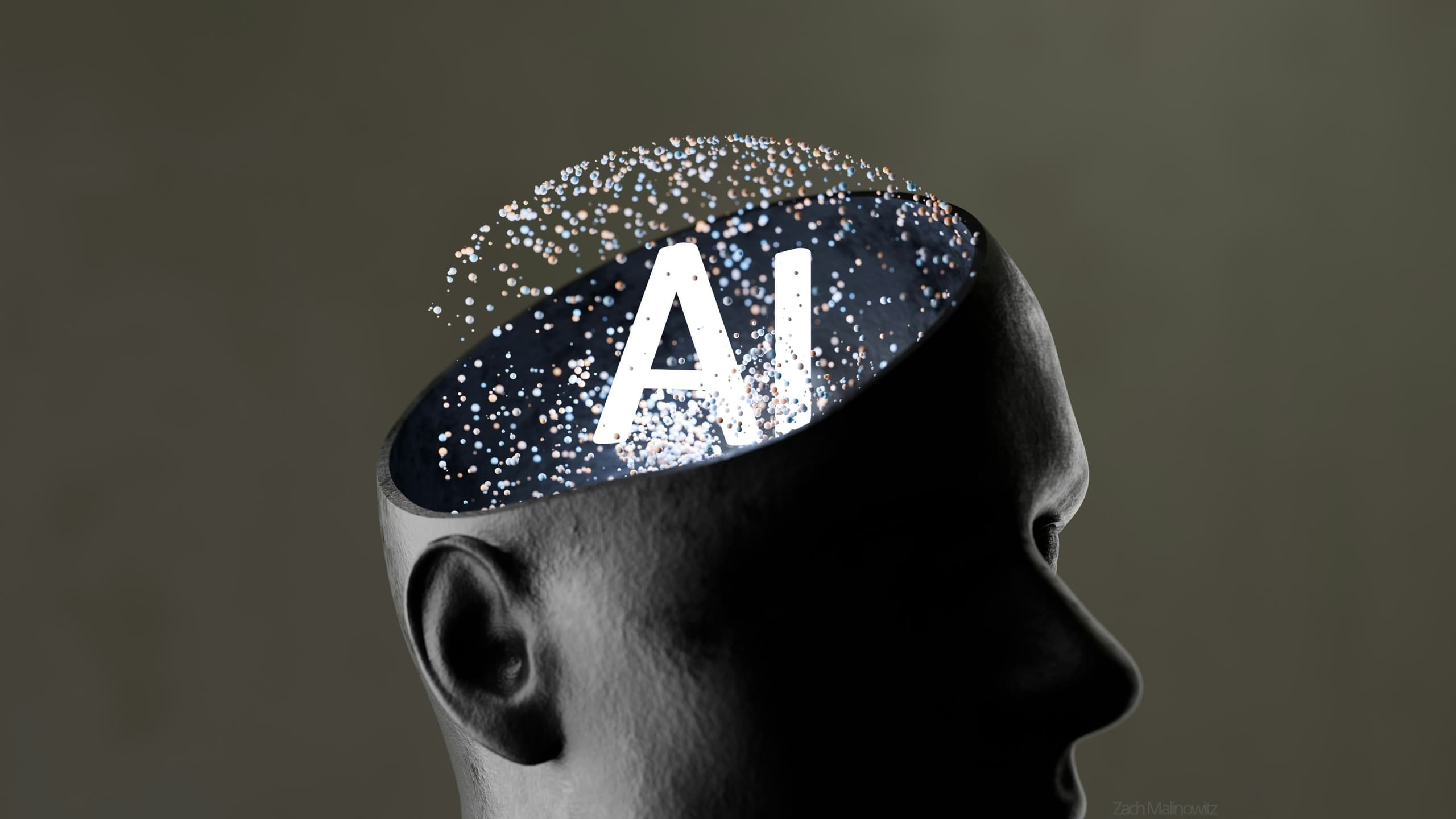
AGI Is Not a 2030 Problem. It Is a 2026 Problem.

Rosie Nguyen
19 May 2026
Insights from the Scaling Business Summit 2026, Ho Chi Minh City.
Lars Jankowfsky opened the summit with a correction. Last year at SBS, he made bold predictions: AGI by 2030, language schools out of business, telepathy in a decade. He came back to check the scoreboard. Most of it had already happened. Some of it had happened faster. And one part had gotten significantly more dangerous.
Lars Jankowfsky, Founder at Gradion, delivered the opening keynote: a sharp, unsparing update on the state of AI in 2026. No hype, no disclaimers. Just the signal, the risk, and the three things every founder and operator needs to do this week.

Here is what he said and what it means for your business.
1. The AGI Timeline Just Collapsed
One year ago, the consensus among serious AI scientists placed AGI - Artificial General Intelligence, meaning AI that matches or exceeds human-level reasoning across all domains, somewhere between 2030 and 2032. That consensus is gone.
“Pretty much every serious scientist in AI now expects AGI within this US presidential term,” Lars said. “So this year or next year. That is a massive change.”
The debate about whether AGI is a 2030 problem is closed. It is a 2025 or 2026 problem.
The numbers behind this shift are not abstract. Since GPT-4, the cost of intelligence per token has dropped 200 times. Hundred-billion-dollar compute clusters are now standard infrastructure. Ray Kurzweil long considered the most optimistic voice in AI forecasting is now the conservative one. Everyone else has moved faster.
What this means practically: decisions your company was planning to make about AI in three years need to be made now. The environment you are operating in will not look the same in 18 months. The leaders who are calibrated to that reality will have an enormous advantage over those still treating AI as an experiment.
Lesson 1: The AGI timeline has moved from 2030 to 2026. Every strategic plan that does not account for that is already outdated.
2. The J-Curve Is Real and Most Companies Quit Right Before the Payoff
Seventy percent of all AI projects fail. Not because the technology does not work, it does. They fail because of what happens in the first few months after implementation: the J-curve.
“You are like, hey, I have AI, everything is better but actually it gets worse,” Lars described. Productivity drops. Confusion increases. Teams push back. Most companies hit this dip and conclude that AI does not work for them. They stop. They fall behind.
The J-curve is not a sign that something is wrong. It is the normal cost of any genuine transformation. The companies that understand it in advance, that plan for the dip, communicate through it, and hold the line are the ones that come out the other side with compounding advantages.
The practical fix is not technical. It is leadership.
“Plan for the J-curve,” Lars said. “Plan for the dip. Yes, it is normal. Productivity will go down. There will be pushback.”
Name it before it happens. Tell your team what to expect. That framing alone will prevent most early failures.
Lesson 2: The dip is not a failure signal. It is proof that transformation is happening. The companies that quit in the valley are the ones that end up farthest behind.
3. AI Does Not Fail. Fear Does.
The real reason AI projects collapse has nothing to do with the models, the data, or the infrastructure. It has to do with the people sitting in your office who are watching the rollout and quietly asking one question: does this mean I am next?
“Why would they support it? It makes absolute sense that they are like, please let's keep everything as it was. I don't want it,” Lars said. “Because human beings have emotions. They have fears. They have families to feed.” When companies forget that, they do not get resistance. They get sabotage, often passive, often invisible, always effective.
The solution Lars proposed is not incentives or mandates. It is clarity. He calls it the “AI soon” framework: tell your team explicitly what will be automated and, critically, what will never be automated. “We will never take away the human connection from our talent acquisition team. The machine will not be able to do that, at least not in the foreseeable future.” That statement gives people a foothold. It turns a threat into a boundary.
The most dangerous thing a leader can do right now is implement AI without addressing the fear first. The most productive thing is to make the boundary visible before the rollout begins.
Lesson 3: Address the fear before you launch the tool. Name what will not be automated. That one conversation will do more for adoption than any technology choice.
4. Stop Scaling People. Start Scaling Compute.
For twelve years, the formula for growth was linear and simple: more revenue requires more people. That formula no longer applies.
“What we need is: you want more revenue, you scale your compute, not necessarily the people,” Lars said.
The metric that matters now is revenue per employee. If that number is not rising, something is wrong. If it is rising, AI is doing its job.
This reframes how you audit your business. The question is not which department could benefit from AI. The question is where is the biggest pain, and where can AI eliminate it at scale. Lars gave a specific example: a client automating 80% of customer support email responses with AI, keeping human agents only for the complex cases. The result is a smaller, higher-leverage team and dramatically lower unit costs.
The warning he attached to this: building your own LLM is almost never the answer. Companies that invested half a million to a million dollars building proprietary models found that their employees quietly kept using ChatGPT anyway, because the commercial models were simply better. “Whatever you implement yourself, it will never be as good as a GPT,” Lars said. Start with agentic systems applied to specific, high-value problems. Do not start with infrastructure.
Lesson 4: The growth formula has changed. Revenue scales with compute, not headcount. Audit your biggest pain points and automate one this week.
5. Machines of Loving Grace or the End of Everything
Lars did not avoid the dark side. P-Doom, the estimated probability that AGI leads to human extinction was around 5% last year. This year, the scientific average has gone up, not down. Safe Superintelligence (SSI), founded by Ilya Sutskever, raised $32 billion in seed funding with no product. “I have never heard of a company that got $32 billion and there is nothing,” Lars noted.
![[SBS 2026] Keynote: 2026: The State of AI - An Update. Machines of Loving Grace](/api/media/file/Keynote%202026%20The%20State%20of%20AI%20-%20An%20Update.%20Machines%20of%20Loving%20Grace-1-400x300.jpg)
The geopolitical risk is equally stark. If one nation reaches AGI first whether the US or China, the other will not simply accept the gap. The scenario Lars described was not science fiction. It is the kind of calculation that defense ministries are already running.
But he did not leave it there. The counter-argument is Dario Amodei's 2025 essay, “Machines of Loving Grace” - the source of this keynote's title. Amodei, Co-founder of Anthropic, argues that if we get AI right, we solve cancer, fix mental illness, stabilize the climate, and address nearly every serious challenge humanity faces. The upside is as large as the downside. The outcome depends entirely on what we choose to build and how we choose to govern it.
“It is just technology,” Lars said. “It depends what you do with it.” He named Dario Amodei and Demis Hassabis as examples of the people trying to get it right. He is less convinced about others. The point was not to assign heroes and villains. It was to remind the room that the choices being made right now, by founders and operators and investors, are part of the same Oppenheimer moment, the moment when the technology becomes powerful enough that what we do with it defines everything that follows.
Lesson 5: The risk and the opportunity are both real and both enormous. The founders who stay informed, stay healthy, and stay in the arena are the ones who will help determine which side wins.
The CEO Execution Playbook: What to Do Tomorrow
- 1. Recalibrate your AGI timeline. Remove 2030 from your planning horizon. Treat AGI arrival as a 12-to-24-month scenario and ask what that means for your current product, team structure, and competitive position.
- 2. Pick one agentic automation to implement this month. Not a chatbot. Not an LLM. One specific, high-pain process, customer support, HR screening, invoice processing, and build a targeted agent for it. Start small, prove the model, then expand.
- 3. Run the 'AI soon' conversation with your team. Before your next AI rollout, explicitly map what will be automated and what will not. Put it in writing. The clarity will unlock more adoption than any training session.
- 4. Track revenue per employee, not headcount. Set a quarterly target for this number and review it alongside your standard growth metrics. It will tell you faster than anything else whether your AI investment is working.
- 5. Protect your physical capacity to lead. The pace of change will not slow down. If your body and mind are not optimized for sustained high performance, the decisions you make in the next 24 months will reflect that. Treat health as a business priority, not a personal one.
About the author
Rosie Nguyen
Rosie Nguyen works at the intersection of Marketing, Communications, and meaningful Storytelling at Gradion. She covers leadership and scaling, writing for the founders and operators building across Asia.
Something from this keynote land?
Gradion helps companies navigate AI transformation without losing the human thread. If you are trying to figure out where to start or why your last AI project stalled, we want to hear from you.