
A Vision Statement Has Never Built a Brand. A Purpose Has.

Rosie Nguyen
7 July 2026
Insights from the Scaling Business Summit 2026, Ho Chi Minh City.
Most people in business think they understand branding. They think it is the logo, the colors, the tagline. Dominic Mason has spent 33 years proving otherwise and the companies that hired him along the way are worth considerably more because of it.
Dominic is Managing Director at Sedgwick Richardson SEA. If you have flown Singapore Airlines, shopped at VivoCity, or heard Dragon Capital's name in any financial conversation about Vietnam, you have encountered his work. In a fireside conversation, Dominic walked through five strategic lessons that distinguish the brands that scale and last from the ones that spend heavily and disappear.
The session covered five points. Each one challenged something the room thought they already knew.
1. A Brand Is Not a Logo. It Is a Reputation You Build Deliberately
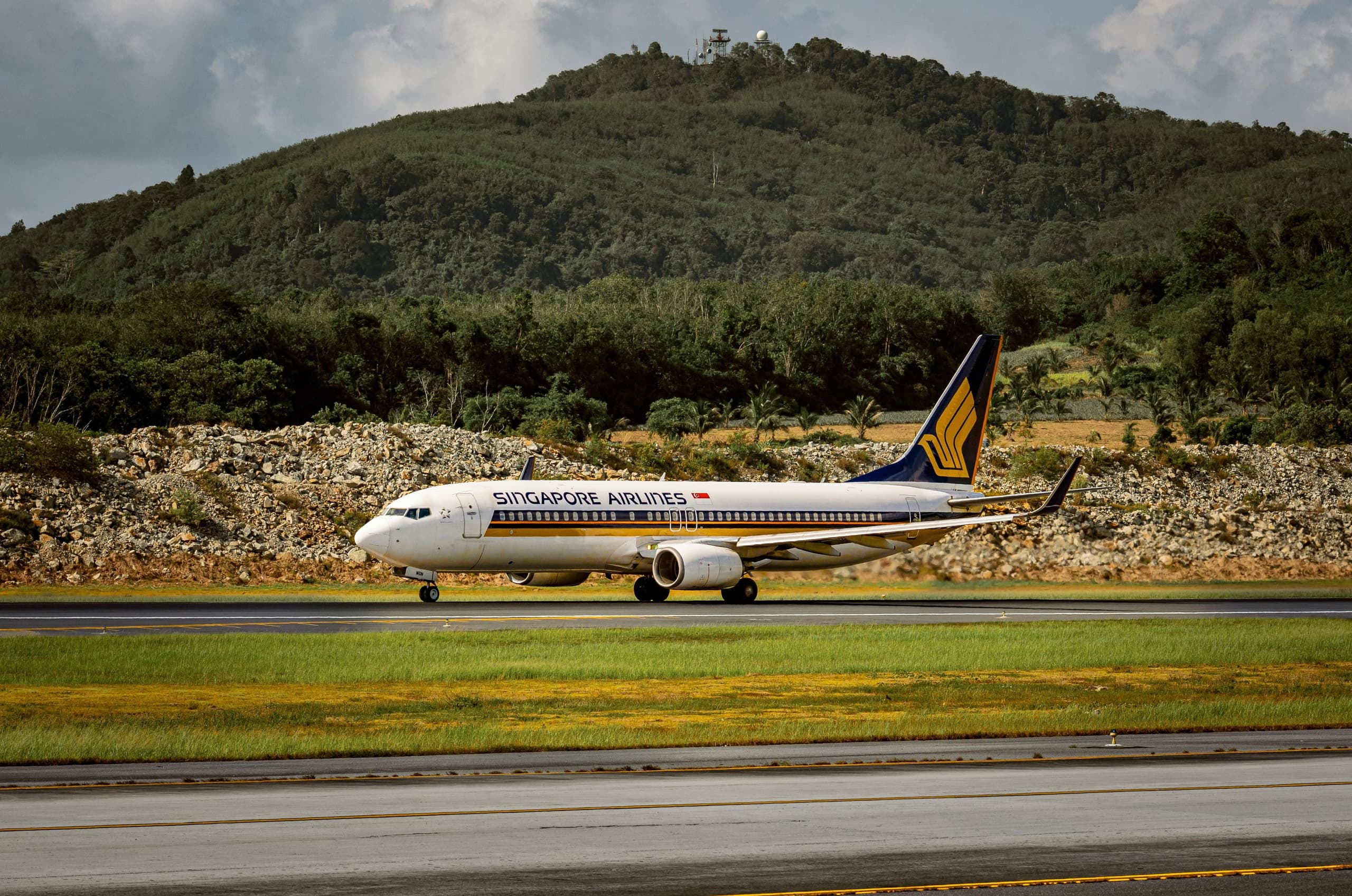
The Singapore Airlines logo was designed in 1972. If you have flown on it, you did not pay a premium for that logo. You paid for the training behind the Singapore Girl, the longest cabin crew training program of any airline in the world, covering wine, first aid, food, and the cultural nuances of every passenger onboard.
That is what a brand actually is. As Dominic put it: “Branding is about helping businesses scale their reputations strategically and sustainably.” The logo is the mark of that reputation. It is not the reputation itself. Singapore Airlines is worth three billion US dollars. Not because of the mark, but because of everything the mark stands for.
Tiffany & Co. makes the same point from a different angle. The women in the room recognized the brand before any logo appeared from the color alone. Tiffany registered that specific shade of blue in 1989. They went beyond the logo to build an iconic asset that signals the brand without any wordmark at all. The brand idea underneath it: enduring love. Two words. Three billion dollars in brand value.
Lesson 1: Your logo protects your intellectual property. Your brand builds your reputation. Do not confuse the two and do not invest in one while neglecting the other.
2. A Vision Statement Has Never Built a Brand. A Purpose Has.
Dominic learned this lesson from Wally Olins, the pioneer of corporate branding. Olins had a trick he used in boardrooms across Germany, France, the UK, and Spain. He would show the board their own mission statement alongside five competitors' statements and ask them to identify which was theirs.
The reaction was always immediate, and always the same: all the statements looked similar. They didn't differentiate anyone. In some cases, board members couldn't even recognize their own company's statement.
“Vision and mission and values don't really give you a strong brand. What companies are doing now is looking for something more purposeful, something aspirational, inspirational, something that's unique to them.”

The better question is not what you do or what you aspire to be. It is why you exist, and how you intend to make money in a way that is scalable and ideally unique. Dominic showed four examples from memory: IBM, industry-leading technology solutions for business advantage. Rolls-Royce, the pinnacle of luxury. Nestlé, the world's leading nutrition, health, and wellness company. And his favorite, Dove's two-word purpose statement: real beauty.
Dragon Capital, whose work was mentioned at the Summit, built their brand on a purpose Dominic described as “a trusted gateway” bringing the world of financial investing to Vietnam, and Vietnam to the financial world. That is a brand that can scale across borders because the idea is clear enough to travel.
Lesson 2: A vision statement tells people what you want to be. A purpose statement tells people why you exist. Only one of those builds a brand.
3. Simplicity Is Not Laziness. It Is the Hardest Work in Branding
Dominic had a slide from an old railway station in Singapore. Walking through it, he translated the wall of content: vision statement, mission statement, quality standards, a slogan, objective functions, more objective functions, nine core values, a pledge, a prayer, and a song. He paused and asked the room: who can remember three of those nine values?
Nobody could. And if nobody in the room could, nobody working at that organization could either. “I would bet money that anybody working at KTM couldn't articulate their brand because there's just too much.” Dominic had encountered the same problem recently with a major Singapore company, the brand manager, after years in the role, could only name four of the organization's seven values correctly.
The reason companies accumulate complexity is not diligence, it is the opposite.
“It can take a lot more work to get it down to a few words than it can be just to regurgitate and write long statements and constructs.”
- Singapore Airlines: great way to fly. The romance of travel.
- Tiffany: enduring love.
- Dove: real beauty.
These are not simplified versions of longer ideas. They are the result of harder thinking.
Lesson 3: If your team cannot remember your brand values from memory, your brand is not working. Fewer words, more meaning, that is the brief.
4. Brand Is Not Marketing's Problem. Everything Communicates
The Coca-Cola story went around the room fast. You wake up in the morning. A dirty Coke truck cuts you off in traffic. You go to a store and the shelves are dusty. You call to complain and someone answers with a flat, indifferent hello. Every dollar Coca-Cola spent on marketing and branding is now working against them because the people who touch the brand every day were not living it.
Dominic applied this directly: “This gentleman in the picture is obviously not in the marketing department. But if he's parked illegally or his truck is dirty, he's going to influence your perceptions of that extremely valuable brand.”
This is why brand cannot be delegated to a marketing manager. The Summit itself illustrated the point, the environment, the displays, the catering, the experience of being in the room are all brand signals. A brand lives in every customer interaction, every employee behavior, and every operational decision, not just in campaigns.
On the question of AI, Dominic was direct: it will accelerate content volume and improve efficiency, but the risk is the same.
“Strong brands have very simple ideas. AI tends to generate too many words. Ideally, you want as few as possible.”
Lesson 4: Brand is not a department. It is the sum of every experience your company creates. Marketing amplifies that experience, it cannot replace it.
5. Brand Culture Starts from Within or It Does Not Start at All
The Ritz-Carlton example is the sharpest illustration of what internal brand culture looks like when it is fully operational. Any Ritz-Carlton employee, including a housekeeper can authorize an expenditure of up to two thousand US dollars, without manager approval, to create an exceptional guest experience. The brand idea underneath this empowerment: ladies and gentlemen serving ladies and gentlemen.
That rule is not a marketing policy. It is a cultural operating system. It gives every person in the organization both the permission and the responsibility to be the brand. The result: Ritz-Carlton's brand value grew to approximately 1.1 billion dollars, doubled over recent years not because of advertising, but because of what guests experience when they arrive.
Dominic was asked how a company should operationalize values. His answer: do not stop at words.
“Create operational behaviors, rituals, specific ways in which you want your employees to live those values. Don't just let them work it out for themselves.”
A question from the audience touched on brands operating across different cultural contexts, specifically, how a company like Gradion maintains consistent values across Asia and Germany. Dominic's answer landed well: if your value is a human trait, it travels. Fairness, for example, is not culturally dependent. It is a universal standard for how you treat people. That is the test for any value worth keeping.
Lesson 5: You cannot scale a brand that only exists in your marketing materials. Scale begins when the brand lives in the behavior of every person in your organization.
The CEO Execution Playbook: What to Do Tomorrow
- 1. Replace your mission statement with a purpose statement. Ask: why do we exist, and how do we make money in a way that is unique? Write the answer in fewer than ten words. If you cannot, the thinking is not done yet.
- 2. Test your brand recall. Ask three employees from different departments to name your company values from memory without looking. Whatever percentage can, that is your brand internalization score. If it is below 80%, simplify.
- 3. Identify your non-marketing brand moments. List five touchpoints where customers encounter your brand that have nothing to do with campaigns: delivery, invoicing, customer support, how meetings are run, how complaints are handled. Audit one this week.
- 4. Find your one-line brand idea. Singapore Airlines: great way to fly. Dove: real beauty. Dragon Capital: trusted gateway. What is the single most meaningful and succinct thing you can say about your company? Write it, test it with someone outside your team, and cut it until it cannot be cut further.
- 5. Build one brand behavior ritual. Pick one of your values and define the specific, observable behavior that brings it to life. Make it a standard. Recognize it when you see it. The Ritz-Carlton built a $2,000 rule around hospitality. What is your equivalent?
About the author
Rosie Nguyen
Rosie Nguyen works at the intersection of Marketing, Communications, and meaningful Storytelling at Gradion. She covers leadership and scaling, writing for the founders and operators building across Asia.
Brand strategy is just the start.
Scaling the systems, platforms, and teams that make a brand promise real, that is where Gradion comes in.